An Early Start
International fusion research began in 1985, when U.S. President Ronald Reagan and Soviet leader Mikhail Gorbachev signed a joint declaration to explore the peaceful use of fusion energy. This marked the birth of the ITER project (International Thermonuclear Experimental Reactor), which became the symbol of global collaboration in fusion science for decades.
In recent years, however, the landscape has evolved. Breakthroughs in plasma control and magnet technology have opened the field to a new generation of research players. Numerous smaller, often privately funded or state-supported initiatives are now actively pursuing the goal of building the world’s first fusion power plant.
Addressing the Energy Gap
With increasing political resistance to conventional nuclear power and no scalable, non-nuclear alternatives currently in sight, Small Modular Reactors (SMRs) have emerged as a possible bridge technology. Proven over decades in submarines and other navy vessels, SMRs are seen as a stable, near-term solution while fusion technology matures.
In parallel, interest is growing in alternative reactor concepts such as thorium-salt systems, which are, unlike most historical reactor types, not focused on producing fissile material for nuclear warheads. Regardless of the approach, these technologies require deep, cross-disciplinary research and expertise in:
- Nuclear physics
- Metallurgy
- Coating and 3D manufacturing
- High vacuum systems
- Safe gas handling
- Chemistry and process engineering
- Simulation and mathematics
From Watch Industry Roots to Fusion Labs
As fusion research accelerates, select companies are emerging as key technical enablers, bridging the gap between concept and implementation. One of them is smolsys ltd, a Swiss-based technology specialist with deep roots in industrial tritium handling for the watch and defense industries.
Today, smolsys offers a comprehensive portfolio of solutions for safe and scalable tritium management – ranging from analytical and pumping systems to fully integrated, mobile research environments. At the core of this offering is the RMC (Radioactive Medical Container): a modular, transportable laboratory platform designed to meet the demanding needs of fusion and isotope research.
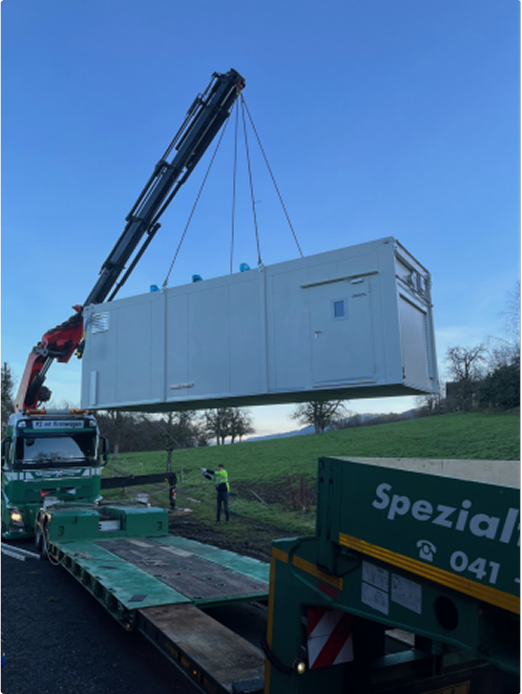
Each unit is built on a fire-safe container base and comes pre-installed with essential infrastructure, including laboratory flooring, fire-resistant windows, ventilation, and air monitoring systems. The interior is fully customizable. Equipped with glove boxes, storage systems, and process machinery tailored to the specific research scope. Once deployed, the lab arrives ready for operation. And when the project is complete, the RMC can be repurposed for future applications.
Testing the Limits of Materials
Understanding how materials perform under long-term exposure to tritium and neutron radiation is a critical aspect of fusion fuel cycle research. Investigations focus on the stability, permeability, and mechanical resilience of advanced metal alloys and surface coatings when subjected to thermal stress and pressure differentials.
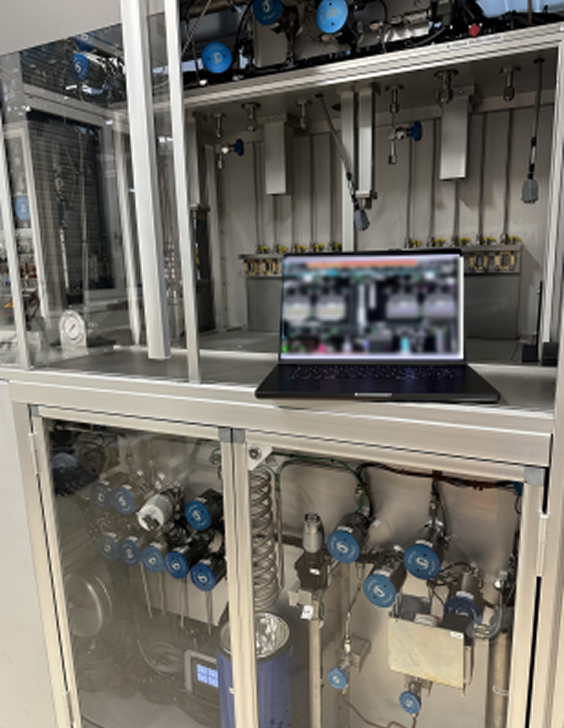
To support this work, smolsys provides customized testing systems that replicate real-world conditions. Material samples are mounted in sealed tube assemblies, allowing tritium pressure and vacuum to be applied independently on each side. Controlled heating simulates diffusion dynamics, while Raman spectroscopy and solid-state sensors / ion chambers collect real-time data throughout the experiment. The system includes fully integrated gas handling, covering pressurization, cleaning, and purging, to ensure safe and repeatable mass tests.
Following exposure, samples can be analyzed directly on site after decontamination, typically in adjacent glove boxes or flow-through clean cabinets, depending on the test configuration.
Searching for a Partner for Fusion Research Infrastructure
Looking for a reliable partner to design and deliver your tritium-capable research systems?
smolsys offers everything from core components to complete lab environments. Developed in-house, tested under real conditions, and ready to scale.

Design amazing digital experiences that create more happy in the world.